
The fighting game community has a gatekeeping problem. When Evo attempted to bring in a mainstream gaming audience by inviting streamers to have showmatches at the large fighting game event, the FGC reacted with rage.
The FGC wants things to be authentic, genuine, and passionate. They only want streamers at the event who actually care about the fighting game scene. And at the crux of it is an ongoing issue that the FGC won’t really say out loud: the streamers are not good at the game. They only respect those who can play at a high level. Those who excel at difficult games.
The FGC has always emphasized the importance of pulling off difficult combos, of mastering a tricky character, of applauding incredible tech skills. Games are more respected when they’re seen as complex and have a high skill ceiling. Games that newer fans can’t really keep up with or understand while watching because of the nuanced mechanics.
I’m here to say that fighting games don’t have to be hard to be good. But why has this even become such a big part of the fighting game scene?
FGC culture has historically celebrated complexity and try-hards
Fighting game culture can be a bit old-school. It’s rooted in a lot of tradition. This is often where the gatekeeping can come from. Long-time players and fans remember the days of playing Street Fighter in an arcade. They remember the legends of the 1990s, competing in California for bragging rights alone.
Jeannail “Cuddle_Core” Carter has been in the Tekken scene for 15 years. She told Esports Insider that she remembers a time when there weren’t tutorials all over YouTube, Reddit threads discussing frame data, and combo trial modes. You had to really dig in and practice to figure things out. You had to compete alongside international pros to learn from them.
“Resources to get better were so limited, it became a part of what’s considered the ‘grind.’ That mindset has evolved in some ways, but the greats referenced like ‘they had to go through it, they had to do that.’ So the struggle has to exist!” Cuddle_Core explained.
It’s sorta like the old “I suffered to get where I am, so you should suffer too” mentality. These early 2000s fighting game pros dedicated their lives to working out insane combos and uncovering new tech.
In the Smash community, there has long been a rivalry between the Melee and Ultimate scenes. Melee is much older, and so are the players (for the most part). They played back when they had to find out crazy strategies and broken tech on their own, before there were streamers and coaches to break it down for you online. You had to be dedicated.
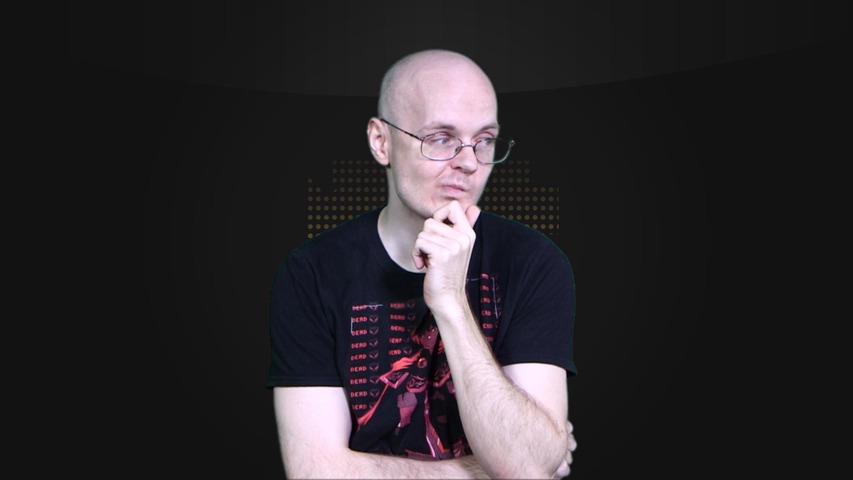
Jason “Mew2King” Zimmerman notoriously studied and documented every single Melee character’s frame data, knockback physics, and hitboxes. He is credited with making tons of discoveries over the years by testing the game religiously, even determining the priority for almost every combination of attacks as well as characters’ falling speeds and weight.
Melee is simpler than Ultimate on the surface, but it’s that very simplicity that has created a desire among top players to dig deeper and deeper into the mechanics to uncover secrets and techniques that push the game to the limit. Melee is considered more technical than Ultimate, which has often earned it more respect.
In April 2026, Dawud “Aklo” Rahman started a huge beef in the Smash community by calling Ultimate “casual.” He continued on X: “Not only does the game lack competitive mechanics, but it actually has anti-competitive mechanics. The input lag is abysmal. There is noticeably more input lag than in Smash 4, and the game has double the input lag of Melee AT BEST.”
Why does this debate come up time and time again? Smash 64 pro and top Combo Contest player Hunter “Huntsman” Cummings told Esports Insider that there’s something about extreme difficulty that appeals to fighting game players.
“I think being able to recognize that someone can do something with their hands that you can’t… That elevates the respect,” Huntsman explained. “There’s an aspect of being technically good at something that boggles your mind. How difficult it is. Something you can never do.
“When I watch aMSa play Yoshi in Melee, I think, there’s no way I could ever do that. It’s almost impossible in my hands. It’s cool to see. That’s why people love the technicality so much, to see someone break the barrier of what we thought was possible.”
I personally can’t deny that that’s cool. I don’t want to watch a Top 8 full of players at my skill level. I want to see the best-of-the-best pushing the limits and doing high-IQ things I’d never think of in my life, especially not that quickly.
I’ve always felt Tea was the most exciting Ultimate player to watch back when he was doing insane things with Pac-Man. Rather than going for the easy response, he’d do something so complicated and precise, risking it all just to pull off something that made the commentators scream in disbelief.
However, the FGC has obviously taken this concept a bit too far. There’s nothing wrong with respecting players who grind and uncover secrets. There’s nothing wrong with being in awe of top players pulling off something insane. But when it sparks heated discussions that put down a game’s entire community, when it scares new players away from joining, and when it causes new games to die out due to ridicule… That’s when there’s a problem.
That’s when the FGC will continue to kill itself rather than thrive.
These days, games are easier, but competition is harder
Luckily, the FGC has started to loosen up about its obsession with extreme difficulty. When I spoke to Fatal Fury: City of the Wolves developers ahead of Evo Las Vegas, I brought up how the game is often touted as more difficult than other titles. Producer Shinya Tamaki said the team is aware of the “sweats” in the FGC, but also didn’t want to scare away casual players. It’s not their intention to make the game extremely difficult.
Director Hayato Konya said something that will always stick with me: “Look at rock, paper, scissors. The game isn’t interesting due to its difficulty. If there were more inputs, it wouldn’t become more fun. It’s fun because you’re reading your opponent’s reactions, what they may send out next.
“The fun part of fighting games isn’t the complicated inputs. It’s the mind reading and the back-and-forth with your opponent, seeing how they react. If we are able to level that and make it easier, the gameplay is more dynamic.”
And that’s really it. The game itself doesn’t have to be hard at all. It’s the players who push the limits, and that’s what makes it exciting. Everyone should be able to play. Everyone should be able to learn the game. The exciting part is seeing the players who can take it well beyond what you thought was possible.
“What makes a fighting game good is that there are other techniques within the game that allow the player to dive deeper into the game if they want,” Cuddle_Core said. “There’s always room to explore something. In Melee, people are finding out about the game all these years later. As long as the game has that, even if it’s easy to get into, as long as there’s always something and it keeps me coming back as a competitor, that’s what makes a good fighting game esports title.”

Huntsman agreed. He said that Smash 64 can be considered difficult, but the real challenge lies in the mind games. You have to try to read your opponent, just like rock, paper, scissors. You study their playstyle. You predict where they will land. Is it better to crouch, approach, jump, or back away? That’s where the difficulty should lie, not the game itself being confusing and complex.
This is part of the reason why I think 2XKO will die: it’s not beginner-friendly. The games that are succeeding, Street Fighter 6 and Tekken 8, have started to really focus on casual players. There are tutorials and game modes dedicated to helping them learn. There are simplified control options so they can pull off fun combos without pressing 230498 buttons in .03 seconds. They are making the game accessible.
Avatar Legends: The Fighting Game has realized this. You need to appeal to new players to survive in the saturated fighting game scene. Players are calling its Combo Breakdown Mode “innovative” since it’s never been seen before.
Invincible VS is going for the same concept: allow new players to thrive, but reward those that do the extra grinding.
“You can literally press the button and do a bad*** combo if you do it enough times. Have fun. Press any button you want. It’s gonna work,” Game Director Dave Hall told me at Evo Las Vegas. “As you get better, you can figure out how to reduce meter and all those fun things. When do I tag? When do I throw these extra gameplay elements in there? It starts to add onto itself.”
The fighting game scene will always respect and reward those that have insane skills, who push a game beyond what you thought was possible. But it’s no longer the only way to enjoy being a part of the FGC.
“It’s a huge part of the competitive scene, but not the only part,” Cuddle_Core noted. “All skill levels have to exist within a community. It helps build the space and support the games. Everybody starts at the beginning.”
While there is still a lot of online discourse about difficulty, the community feels much more approachable. That old-school gatekeeping isn’t as strong. You’ll see a lot more diversity these days in regards to age, gender, and race.
Cuddle_Core confirmed: “On social media, I’ve seen a bit of that conflict. But I think it is a lot more welcoming for newcomers to come in and learn from other players. Building their own space and own journey as competitors, just loving the game.”
At this point, don’t worry if you don’t have the Drive Gauge management down in Street Fighter 6 or if you don’t know what Yoshi’s double jump cancel means in Melee. Just enjoy the game. Enjoy the community. Enjoy the space. Those tricky things will come if you want them to. If you put in that extra work.
But fighting games don’t have to be hard to earn respect anymore. It’s more impressive if players discover new tech or uncover new true combos, rather than if the game itself is incredibly convoluted.
The post “The struggle has to exist!”: The FGC is finally realizing games don’t have to be hard to be good appeared first on Esports Insider.
